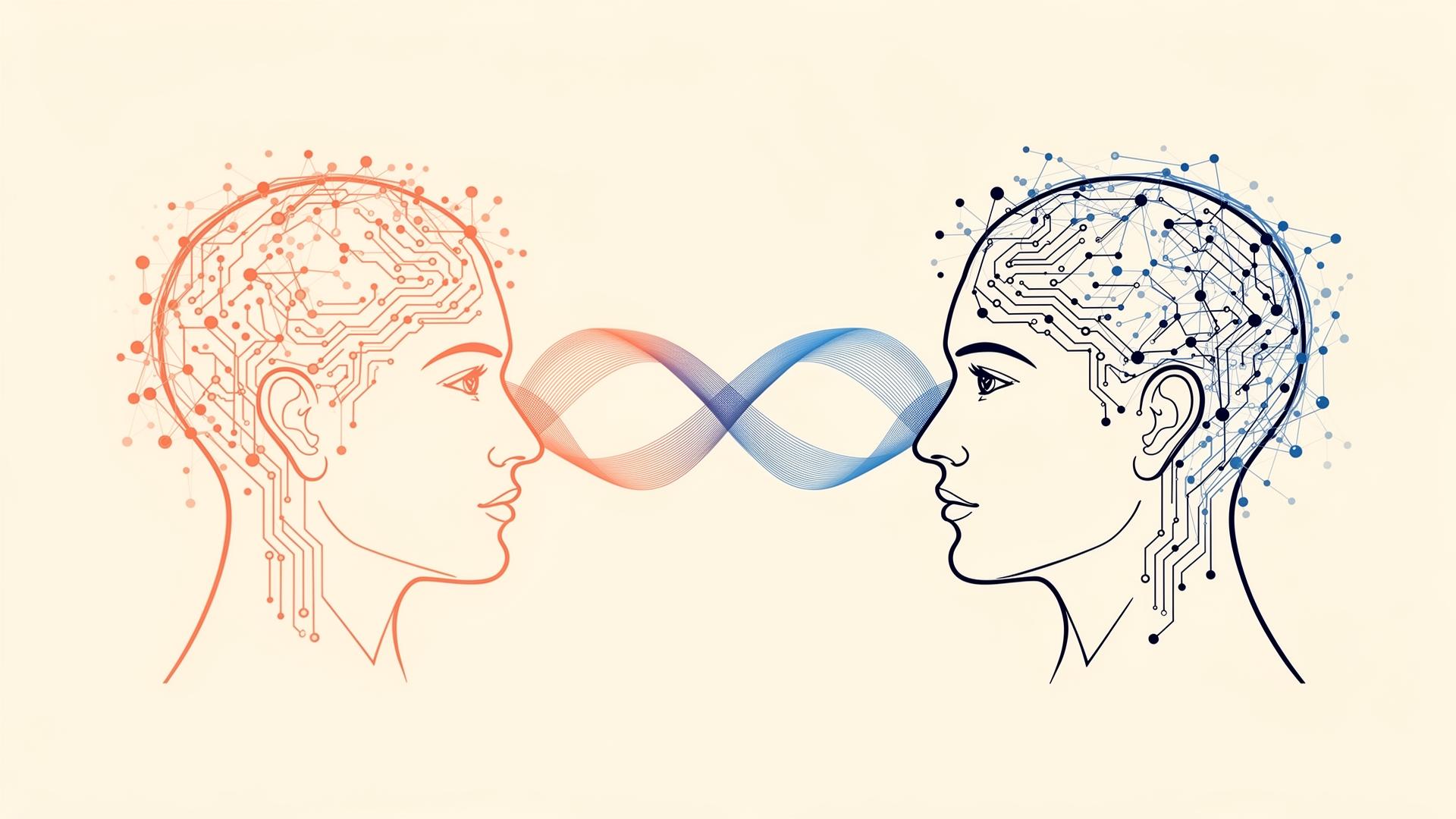


Human–AI Transformation & Value Creation

Turn Human–AI collaboration into value that lasts.

More AI tools, pilots, and productivity gains don’t automatically translate into meaningful value. I help organizations identify problems worth solving, uncover what holds progress back, and co-create and test better ways for people and AI to work together. Together, we build the capabilities and organizational conditions to turn promising ideas into measurable, lasting value for organizations and people.

Usage ≠ Adoption ≠ Value

Using AI is not the same as changing how we work, and neither automatically creates meaningful value.

  • 10+ years in transformation
  • Fortune 500 client contexts
  • Executive MBA, ESADE
Partner, Innovation Lab HamburgInnovation Lab Hamburg
Point of view

AI efficiency is only the beginning.

AI can automate work and create capacity. But capacity alone is not the return.

As organizations invest, experiment, and deploy AI, the harder questions are becoming clearer:

Where is AI actually creating value? What needs to change in the organization around it? And how do we make sure that value is captured and sustained?

Efficiency matters. But the real opportunity is deciding what the organization does differently because of it.

Efficiency creates capacity.
Value comes from what that capacity enables.

Value created ≠ value captured ≠ value sustained.

How I help

How I help organizations shape change.

What organizations call AI transformation is really the transformation of a Human–AI system. As AI capabilities evolve, organizations need to continuously rethink how people, technology, work, decisions, roles, capabilities, structures, governance, and value creation fit together.

I use human-centered design, systems thinking, co-creation, and experimentation to help organizations understand where change is needed, prototype better Human–AI systems, and build the capability to keep learning and adapting as both the technology and the organization evolve.

  1. 01

    Understand where change is needed

    See the system before choosing the solution.

    I help organizations explore what is changing, where value is getting stuck, and where intervention could have the greatest effect.

    This can involve business priorities, customer and employee needs, decisions, work, technology, structures, incentives, capabilities, governance, and other relationships across the organizational system.

    The goal is not simply to generate more AI use cases. It is to identify meaningful leverage points for change.

    Engagement format

    Human–AI Transformation Workshop

    Typical format: Half-day (3–4 hours) or full-day (6–7 hours)

    Explore the organizational challenge, surface different perspectives, understand the system, identify leverage points, and decide what deserves further exploration or experimentation.

    Explore the workshop
  2. 02

    Prototype better Human–AI systems

    Make organizational change tangible enough to test.

    Once an important leverage point is identified, I help teams co-design and prototype how a better Human–AI system could work in practice.

    Depending on the challenge, this may involve roles and responsibilities, decision-making, team interactions, customer or employee experiences, knowledge flows, governance, workflows, new capabilities, technology interaction, or combinations of these.

    The purpose is not to design a perfect future organization on paper. It is to create something people can explore, test, learn from, and improve before deciding what should scale.

    Engagement format

    Human–AI Transformation Hackathon

    Typical format: 1–2 days

    A facilitated cross-functional co-creation format to explore meaningful organizational challenges, develop possible Human–AI interventions, and turn promising ideas into tangible prototypes or experiments.

    Engagement format

    Human–AI Transformation Design Sprint

    Typical format: 2–3 weeks, or a 5-day intensive

    Take one important challenge deeper. Co-design, prototype, test, and refine how a better Human–AI system could work before deciding what should scale.

    Explore the design sprint
  3. 03

    Build the capability for change to evolve

    Turn promising change into organizational capability.

    I help organizations create the participation, leadership, capabilities, communities, knowledge flows, feedback loops, and ownership needed for new Human–AI ways of working to evolve and create sustained value.

    This can include internal advocate networks, employee-led experimentation, capability building, communities, knowledge sharing, leadership activation, and mechanisms that connect strategic direction with intelligence from across the organization.

    The goal is not simply more AI usage. It is an organization that becomes better able to learn and adapt as the technology continues to change.

    Engagement format

    Human–AI Capability & Participation Program

    Typical format: 6–12 weeks for an initial program or pilot

    Build the participation, leadership, communities, learning mechanisms, knowledge flows, and feedback loops that allow change to spread, improve, and evolve over time.

    Explore capability & participation
Portrait of Sara Bermúdez

Sara Bermúdez · Human–AI Transformation & Value Creation Strategist

About

Experience behind the work.

For more than a decade, I have led end-to-end innovation and transformation across global organizations, startups, and entrepreneurial ecosystems, as a corporate transformation leader, founder, and startup mentor.

I work across strategy, operating models, people, processes, and technology, using innovation as a mechanism for change and value creation. My approach combines human-centered systems thinking and design with lean experimentation, agile ways of working, and capability building.

Today, I bring that experience to a new frontier: helping organizations use human–AI collaboration to create new value, and to design the systems, work, and capabilities that sustain it.

Founder · Startup mentor · Global transformation experience · Fortune 500 client contexts · Executive MBA, ESADE

Partner, Innovation Lab HamburgInnovation Lab Hamburg
SHAPE

A systemic lens for Human–AI transformation.

AI-driven change rarely sits in one process, team, or technology. It affects an interconnected organizational system.

SHAPE helps make that system visible, identify meaningful leverage points, and understand what needs to evolve for Human–AI transformation to create value that can be captured and sustained.

  1. S: See the System

    Understand the people, work, decisions, technology, and wider system around the challenge.

  2. H: Hear Distributed Intelligence

    Bring together customer, employee, frontline, and leadership perspectives through human-centered insight and co-creation.

  3. A: Activate Agency & Capability

    Build participation, ownership, learning, and the capability to shape change.

  4. P: Prototype Better Work

    Make possible changes tangible, test how Human–AI systems could work, and learn before scaling.

  5. E: Embed Value & Evolve

    Measure what is changing, capture learning and value, and continuously evolve the system.

SHAPE combines human-centered design, systems thinking, experimentation, and organizational capability building to help organizations shape change across the system.

Explore SHAPE
Engagement model

Need support across the system?

For interconnected challenges

Strategic Innovation & Transformation Advisory

Some organizational challenges cannot be solved through one workshop, prototype, or intervention. Strategic advisory provides continuity for leaders navigating interconnected questions across Human–AI transformation, innovation, organizational change, experimentation, capability building, and value realization.

Typical engagement: usually 3–6 months initially, tailored to the challenge.

Explore strategic advisory
  • Innovation strategy and Human–AI transformation
  • Strategic opportunity exploration
  • Experimentation and scaling
  • Human-centered systems thinking
  • Capability development and organizational participation
  • Value creation, capture, and retention
Speaking & Education

Keynotes · Leadership learning · Masterclasses · Guest lectures

Invited to teach and challenge thinking on Human–AI value.

Masterclasses

Capability-building sessions for leadership teams.

Typical format: 90 min–3 hours

Guest lectures

University and program sessions for students and professionals.

Typical format: 60–120 min

Keynotes

Perspective-shifting talks for conferences and offsites.

Typical format: 30–60 min

Leadership learning

Longer-form learning journeys for senior groups.

Typical format: Leadership / team workshop: half-day or full-day · Learning journey: multi-session, tailored

Invite Sara to teach or speak
FAQ

Questions clients often ask.

What do you mean by value beyond efficiency?

Efficiency and capacity matter, but they are only part of the picture. Value can also come from better quality and lower risk, better decisions, innovation and learning, customer and stakeholder outcomes, and stronger human and organizational capability.

Why do you take a systems approach to AI transformation?

Technology is only one part of the system. Sustainable change can involve people, decisions, work, leadership, incentives, governance, capabilities, customer needs, and organizational structures. When only the technology changes, value often gets stuck somewhere else.

Are you primarily helping companies find AI use cases?

No. Use-case exploration can be part of the work, but the starting point is understanding the organizational challenge, the desired value, human needs, and the system around it. Sometimes the right intervention involves AI; sometimes the more important change is in roles, decisions, capability, governance, work, or another part of the system.

What do you mean by prototyping organizational change?

Instead of designing a future organization theoretically, we make possible changes tangible enough for people to explore and test. A prototype could involve roles, decisions, workflows, team interactions, governance, customer or employee experiences, knowledge flows, or Human–AI collaboration.

What role can AI advocates or internal communities play?

Advocates can do more than promote tools. They can identify opportunities, experiment, contribute local context, share knowledge, connect teams, and create feedback between leadership direction and employee experience.

When does strategic advisory make sense?

When several interconnected transformation challenges need continuity over time, rather than one isolated intervention.

Contact

Where is AI-driven change getting stuck in your organization?

Whether you are trying to understand where change is needed, prototype a better Human–AI system, or build the capability to make change stick, let’s talk.

Prefer email? You can also reach me at sara@bermudez-t.com.

Send a message

This form opens your own email application with the details you entered. The website itself does not store or transmit the form data. See the Datenschutzerklärung / Privacy notice for details.